About the Journal
Manuscripts must be submitted in electronically form in pdf and Latex (and any other form of tex) format. Authors are advised to keep a copy of their manuscript since the publisher cannot accept responsibility for lost copies.
A not too condensed style is recommended.
Manuscripts should be typed or printed with sufficient spacing (at least double spaced) with generous margins. Only one side of the paper is to be used, and the pages should be numbered consecutively (not by section or paragraph). Symbols resembling each other should be distinguished by suitable marks. Care should be taken to distinguish between 'belong to' and 'epsilon', 'Oh' and 'zero', 'one' and 'el' etc.
Open Access Policy:
All research papers published in Green Publication Open Access journals are completely open in access: you can read, view, and share them right away. Journal is written under a Creative Commons license, which allows them to be used, distributed, and reproduced in any format as long as the original work is properly cited. The informative journal standards are something we are committed to. For a large number of journals in our portfolio, we're testing groundbreaking journal status. We want to give researchers as many open access publishing options as they do subscription publishing options, reflecting our belief in author autonomy. Green Publications believes that open access to publicly funded science, including research results, is critical to addressing the issues facing researchers.
Copyright License:
We follow the Creative Commons license:
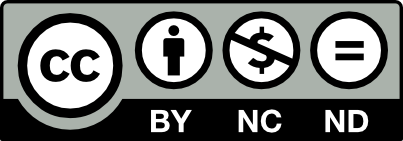
Attribution-Non Commercial-No Derivs
CC BY-NC-ND
This license is the most restrictive of our six main licenses, only allowing others to download your works and share them with others as long as they credit you, but they can’t change them in any way or use them commercially.
View License Deed | View Legal Code
We also provide tools that work in the “all rights granted” space of the public domain. Our CC0 tool allows licensors to waive all rights and place a work in the public domain, and our Public Domain Mark allows any web user to “mark” a work as being in the public domain.